With the rapid advancement of automotive intelligence and connectivity, the smart cockpit has become the most perceptible and differentiating core for users. It integrates multiple displays—instrument cluster, center console, co-driver screen, HUD, and rear-seat entertainment—into a unified experience, incorporating voice assistants, navigation, online music, app stores, and seamless in-vehicle and out-of-vehicle connectivity via 4G/5G, Wi-Fi, and Bluetooth. However, this highly complex software and hardware stack poses significant challenges to quality assurance. Traditional manual testing can no longer cover the dynamic network environments, multi-device interactions, and frequent OTA updates. To address this, the Smart Cockpit / In-Vehicle Infotainment (IVI) and Connectivity Test System has emerged.
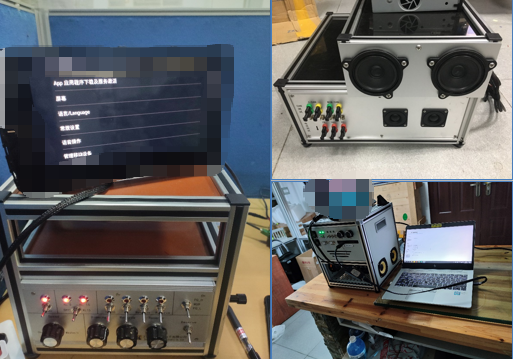
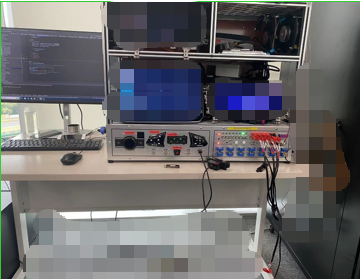
This test system is an automated hardware-in-the-loop (HiL) testing platform designed for full-scenario validation of head units / IVI systems, instrument clusters, HUDs, co-driver and rear-seat entertainment screens, and their interconnected functions. The system consists of a controller HiL rack/bench, a position simulator, sound acquisition and playback systems, and a powerful software platform. The core test rack features a real-time processor and FPGA boards, capable of simulating entire vehicle network signals including CAN, CAN FD, LIN, and automotive Ethernet (100BASE-T1/1000BASE-T1). It accurately emulates vehicle states such as speed, RPM, door locks, lights, and ADAS, allowing the IVI and instrument cluster to operate in the lab as if they were installed in a real vehicle.
The system is equipped with visual and acoustic inspection components. Using advanced large-model image recognition algorithms, it automatically detects on-screen UI elements, icons, and text, enabling identification, programmatic control, and assessment of the head unit and mobile devices. A microphone array and an artificial mouth are used for voice interaction testing, performing rigorous validation under simulated background noise.
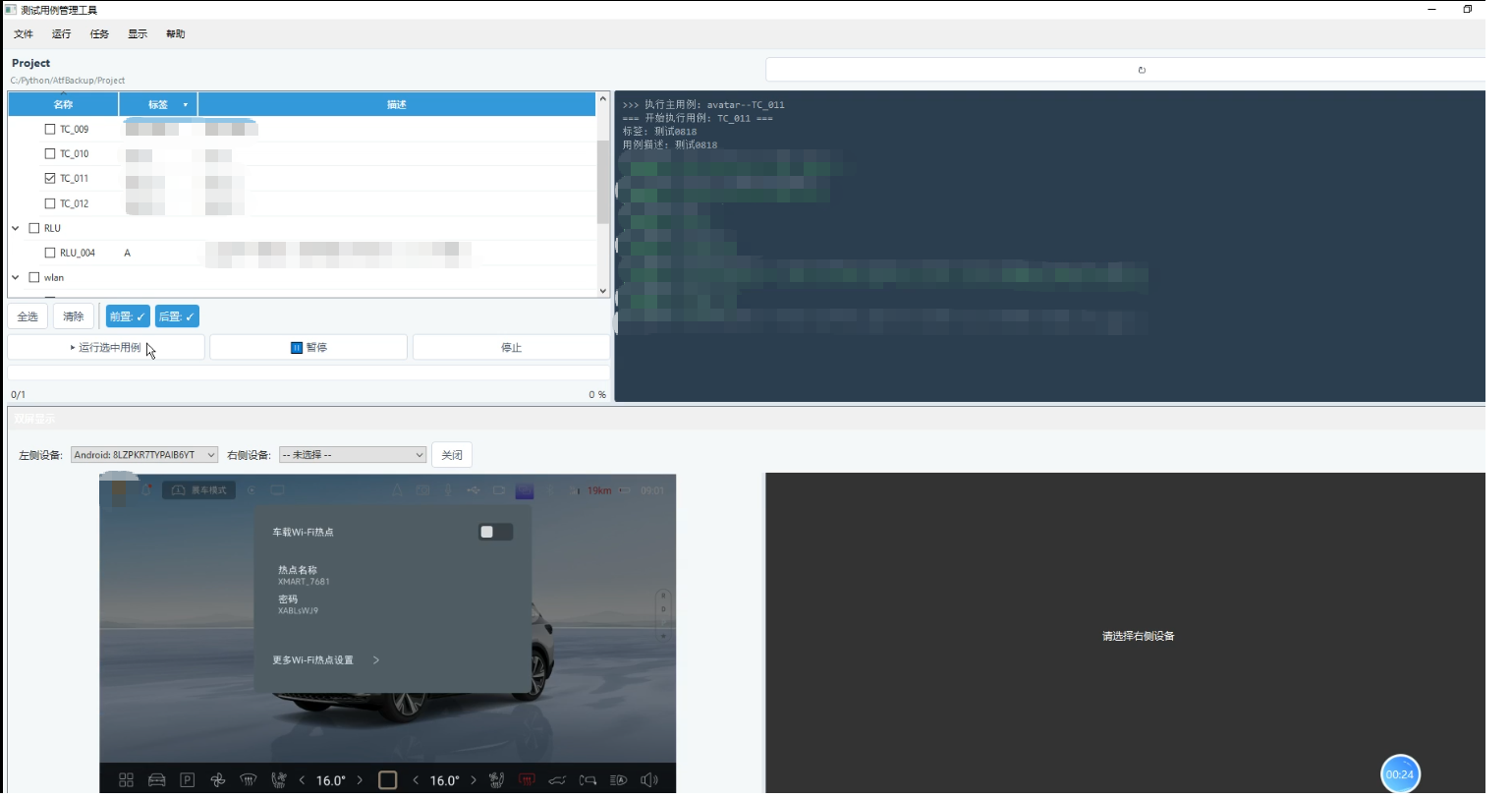
The automated test framework is the soul of this system. Test scripts, developed in Python or via graphical editing, orchestrate all resources: setting vehicle state signals, triggering screen operations (via robotic arm touch or bus‑injected touch events), and capturing screen snapshots and network packets for automatic comparison. The system supports unattended execution of thousands of test cases, integrates with CI/CD pipelines, and automatically generates test reports containing screenshots, logs, and KPI trends.
In summary, the Smart Cockpit / IVI and Connectivity Test System, with its high‑fidelity simulation, full automation, and precise data acquisition capabilities, covers all key quality dimensions—functionality, performance, compatibility, user experience, and network adaptability. It significantly shortens test cycles and provides a solid validation foundation for automakers and suppliers to deliver smooth, intelligent, and reliable digital cockpit experiences.